
Live Bait Dentex Fishing
Precision Strategy, Key Conditions, and Data Sovereignty
Live Bait Dentex Fishing: Precision Strategy, Key Conditions, and Data Sovereignty
Introduction: The Dentex Challenge and the Need for Precision
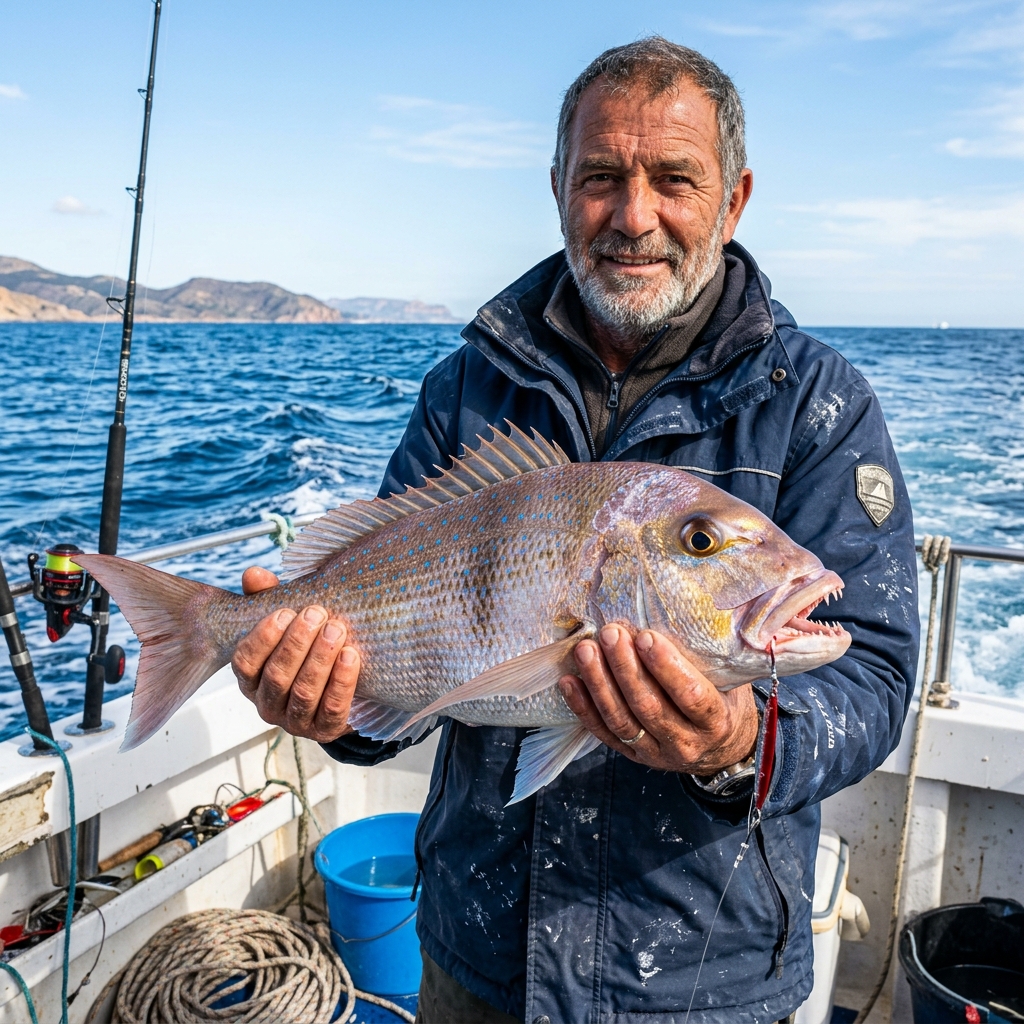
In saltwater sport fishing, few rewards are as highly coveted as the battle with a large common dentex (Dentex dentex). This formidable predator, known as the "king of the rocks," is famous for its raw power, cunning nature, and extreme attachment to specific rocky structures and underwater topography. Catching a trophy specimen is not a matter of luck; it is the result of mastering a precise technique: live bait fishing, combined with a surgical understanding of the seabed and intelligent management of your waypoints.
In this article, we will analyze in depth how to prepare and execute a live bait fishing day for dentex. More importantly, we will focus on the factor that separates average anglers from the pros: positioning technology. We will explain why it is essential to centralize your waypoints in a dedicated application like CAPTA, regardless of whether you use professional plotters or GPS units on board, to keep your secrets safe, automatically record the exact conditions of every bite, and ensure absolute precision on every pass.
1. Live Bait: The Elixir for Big Dentex
The dentex is an opportunistic but highly suspicious hunter. While artificial lures like metal jigs or large soft plastics can yield excellent results, live bait remains the absolute gold standard for tempting the largest and most experienced specimens—those that have seen dozens of lures pass by their caves.
Bait Selection
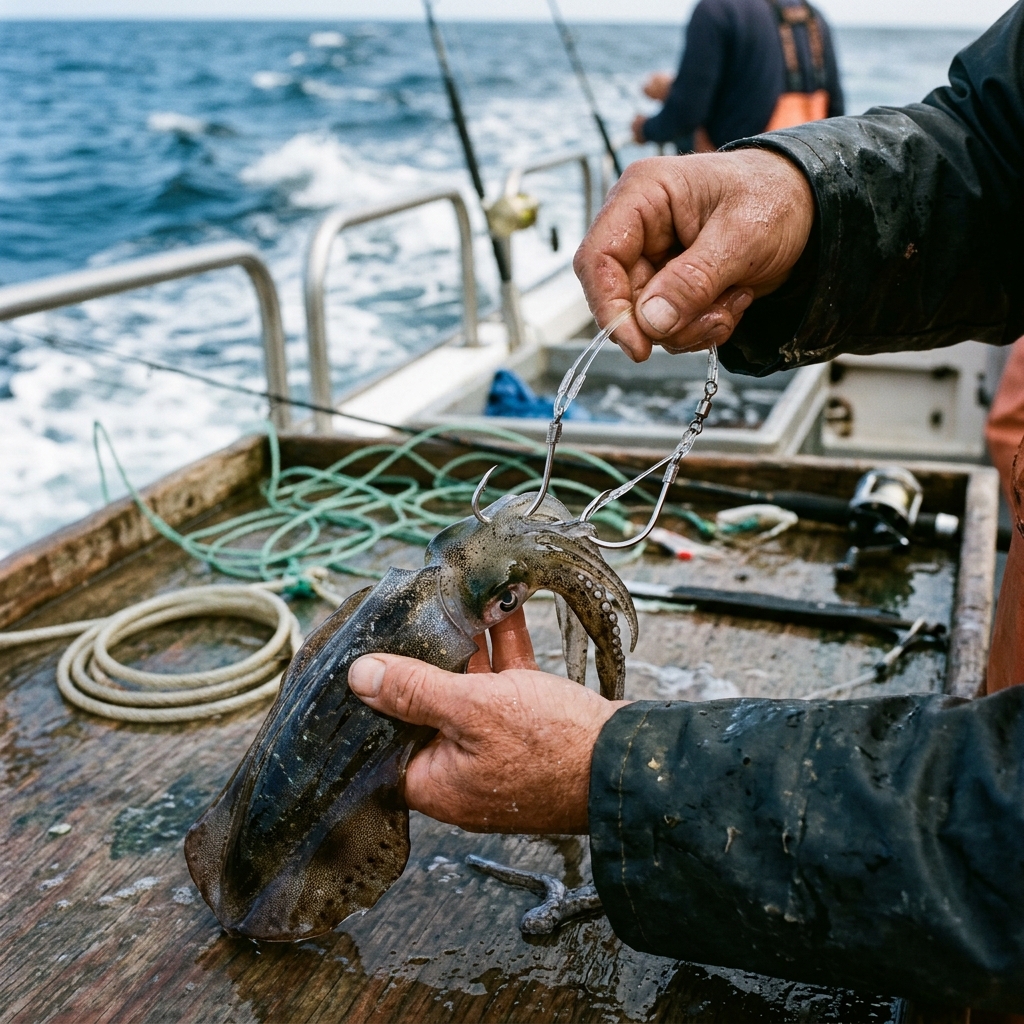
To target dentex, the ultimate live baits are squid (Loligo vulgaris) or cuttlefish (Sepia officinalis). Their swimming action, color shifts, and tentacle movements are irresistible. However, when cephalopods are scarce, baitfish such as jack mackerel (Trachurus trachurus), round herring, sea bream, or Atlantic mackerel are formidable alternatives.
A live squid moving a few meters off the bottom emits panic vibrations that the lateral line sensors of the dentex detect from a distance. The strike is usually explosive: a violent initial bite to disable the prey, followed by a fast run toward its rocky shelter.
The Tactical Rig (Asari or Pennel Rig)
Presenting the bait naturally is vital. A poorly hooked squid will die quickly or swim in an erratic, suspicious manner. The classic rig consists of a high-strength fluorocarbon leader (between 0.50 mm and 0.60 mm) and two hooks in series:
- Sliding Hook (Towing Hook): Inserted subtly through the tip of the squid's siphon or mantle, serving to pull the bait without damaging its vital organs.
- Trailing Hook (Stinger Hook): A larger hook (usually 4/0 or 5/0, beak-shaped) placed freely among the tentacles, exactly where the dentex typically launches its first fatal attack.
Keeping the bait alive throughout the day requires a livewell with constant aeration and water recirculation. Every live squid is a valuable treasure that can make the difference between a blank day and the catch of a lifetime.
2. The Importance of Positioning: Landing Right on the Rock
Novice anglers often think that just being in the "general area" where dentex are known to dwell is enough to get bites. Nothing could be further from the truth. The dentex is a territorial animal that colonizes very specific structures: an isolated rock in the middle of a sandy area, a steep vertical ledge, or the mouth of an underwater cave at depths usually ranging between 25 and 60 meters.
The Surgical Drift
When live bait fishing, whether drifting or using trolling motors with virtual anchors, the bait must pass exactly over the relief or rock where the dentex are waiting. A deviation of just three or four meters due to current or wind can cause the squid to pass over a clean sandy area, being completely ignored.
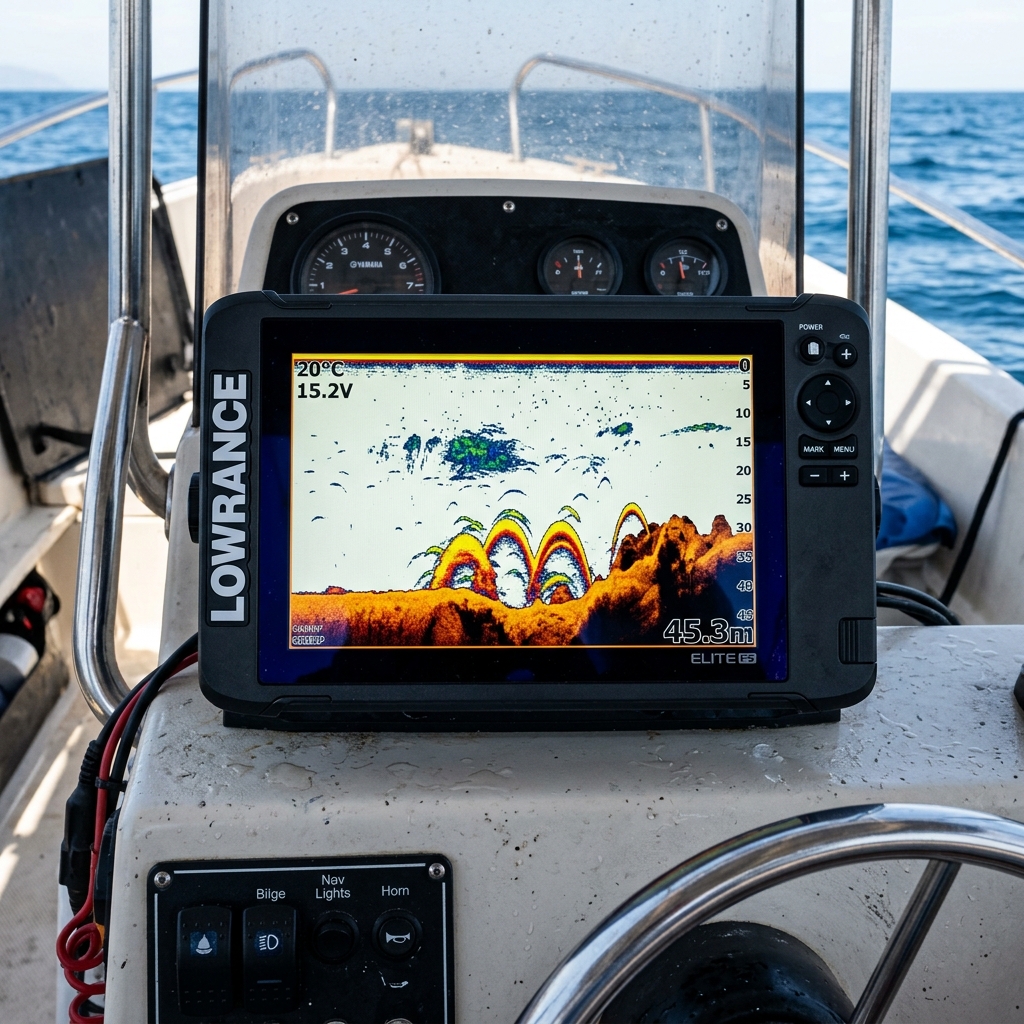
To achieve this precision, it is imperative to read the fishfinder carefully and coordinate the boat's drift so that the line drops vertically just before the obstacle. If you drop the rig too late or too early, the drift will carry it away from the hot spot. Therefore, having the exact coordinate of the structure with centimeter-level accuracy is the foundation of success.
3. Why Centralize Your Waypoints in CAPTA (Even with Professional GPS)
Most sport fishermen have high-end navigation systems on their consoles, such as plotters from Garmin, Lowrance, Simrad, or Humminbird. This equipment is exceptional for safe real-time navigation, viewing marine charts, and analyzing the bottom with CHIRP sonar. However, relying solely on a physical plotter to manage your fishing waypoints is a strategic error.
Data Fragmentation
It is common for anglers to change electronics on their boats over the years or use different devices. Proprietary file formats (like those specific to Garmin or Lowrance) make data migration difficult. In the end, fishermen end up with marks scattered on old SD cards, written by hand in wet notebooks, or trapped in an old plotter that no longer works.
By using CAPTA as your centralized master database, you keep a unified library of all your hot spots on your personal mobile device. It does not matter if you fish from your usual boat, a friend's boat, or if you decide to completely upgrade your console's electronics: your marks remain secure, organized, and accessible in your pocket at all times.
Transparency and CAPTA's OCR Technology
Manually typing latitude and longitude coordinates into a button-operated plotter while navigating in rough seas is a tedious, slow task that often leads to errors. CAPTA solves this problem through its visual recognition (OCR) engine.
You simply point your phone's camera at the screen of your Lowrance or Simrad fishfinder at the exact moment you spot the perfect rock or get a dentex bite. The application scans the screen privately and extracts the precise geographic coordinates instantly, saving the waypoint in your local database in less than three seconds. It is fast, requires no typing, and eliminates any chance of human error. To better understand how this integration works and how to migrate your marks safely, we recommend reading our detailed guide on how to export waypoints from boat plotter to mobile.
4. The Key Factor: Capturing the Moment's Conditions to Return
Many anglers have a waypoint saved simply as "DENTEX 1". They return to that same spot weeks later under different conditions and go home without a single bite. Why does this happen? Because dentex do not feed continuously on the same rock; their activity is directly linked to very specific environmental factors.
Automating Variables in CAPTA
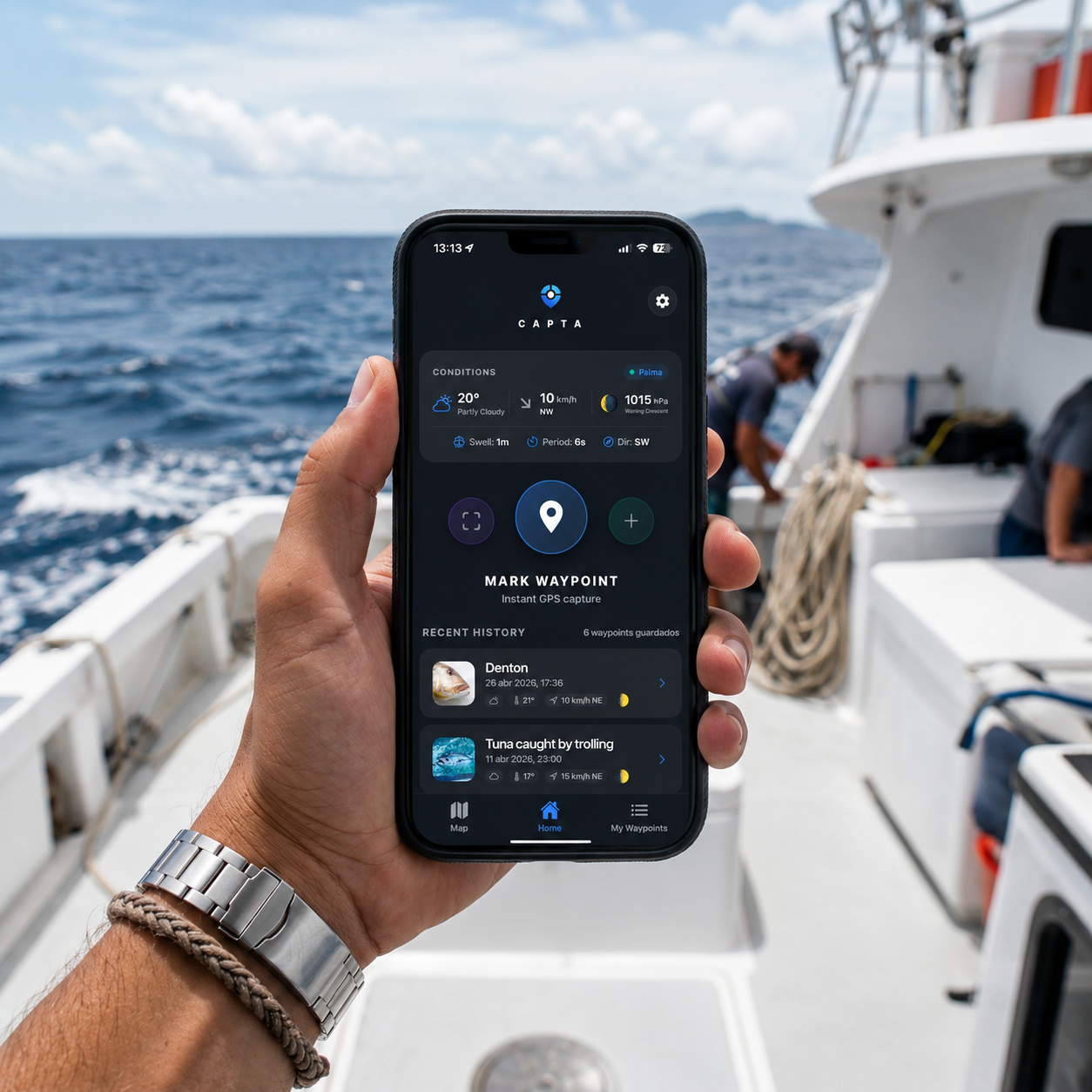
When you save a waypoint in CAPTA directly from the boat, the application does not just store the latitude and longitude. Thanks to its automatic integrations, CAPTA instantly captures and associates the environmental conditions occurring at that exact millisecond:
- The Moon Phase: Essential for predicting the behavior and intensity of tidal currents preferred by dentex.
- Tide and Coefficient: Indicates whether the water is flooding, ebbing, or at slack water—critical moments when dentex go on the hunt.
- Barometric Pressure and Weather: Sudden changes in barometric pressure can activate or completely deactivate the dentex's feeding urge.
- Wind Direction and Strength: Factors that determine the speed and direction of the boat's physical drift over the rock.
With all this data automatically saved next to the spot, you can analyze your logbook and discover that a specific dentex rock at 40 meters only yields catches when there is a high-coefficient ebbing tide and stable barometric pressure above 1015 hPa. The next time these exact conditions appear in the forecast, you will know precisely which waypoint to target.
5. The Power of Surgical Precision: Dropping on the Exact Rock
Live bait dentex fishing is a game of inches. These predators usually patrol the windward side of the rock, where the current collides with the structure and concentrates baitfish. If your bait drops on the leeward side, the line will likely be sheltered from the current, and your squid will fail to catch the fish's attention.
Executing the Perfect Drift
With CAPTA and the precision of its data, you can plan your drift with military precision:
- Visualize the Current: Observe the direction in which the wind and current are moving the boat.
- Position the Boat Upcurrent: Use the ultra-precise waypoint saved in CAPTA to navigate and position the boat 30 or 40 meters ahead of the rock in the direction of the drift.
- Drop the Bait: Release the live squid into the water and let it descend rapidly, guided by a heavy sinker.
- Cross the Summit: The live squid must brush the top of the rock just as the boat is positioned directly over the saved waypoint. Prepare for battle: the strike of a large dentex will require a tight drag and heavy pumping to prevent it from entering the rocks and breaking your line.
6. Absolute Safety and Privacy to Protect Your Spots
The world of sport fishing has changed with mobile technology and social media. Today, most marine mapping and navigation apps base their business model on collecting community data (as we explain in our analysis on the danger of social apps and community bathymetry).
CAPTA's Anti-Social Approach
At CAPTA, we understand that your dentex marks represent countless hours of navigation, fuel costs, and personal effort. That is why the application is designed under a strict Privacy by Design philosophy:
- 100% Local Storage: Your waypoints are saved locally on your device's internal memory, encrypted and protected.
- No Central Servers: CAPTA does not store your information on third-party cloud servers where it could be leaked, analyzed for advertising algorithms, or sold.
- No Public Heatmaps: Unlike Navionics or similar apps (compare the differences in detail in our article Navionics vs CAPTA: Which is the best app for fishing?), your navigation tracks and hot spots are never aggregated into community charts that other users can download to fish on your rocks.
Your knowledge remains your exclusive property. With CAPTA, your sea secrets are truly safe from prying eyes.
Frequently Asked Questions
What is the best moon phase for live bait dentex fishing?
While dentex feed during strong currents generated by spring tides, the days of the waxing gibbous and full moon are often exceptionally productive. During these phases, squid and cuttlefish move more in the midwater layers, and intense currents force dentex to seek shelter next to rocks, positioning themselves in perfect ambush spots. Logging every catch in CAPTA allows you to note the exact moon phase of the moment and discover local patterns that do not appear in general guides.
Why is it preferable to use squid or cuttlefish instead of baitfish for dentex?
Both live squid and cuttlefish have excellent hydrodynamic resistance and emit highly attractive vibrations thanks to their flexible siphons and mantles. Unlike a jack mackerel or Atlantic mackerel, which tend to swim nervously away from the bottom, cephalopods actively seek shelter in the rocky structure, placing your rig directly in the hunting zone of the dentex. Furthermore, the soft flesh of cephalopods makes it easier for the fish to engulf the bait completely, dramatically increasing hookup rates.
How does CAPTA's OCR coordinate scanning help prevent the loss of waypoints?
When you are fighting a dentex or maneuvering the boat under strong wind and current, you do not have time to manually type coordinates on your phone or plotter. By using CAPTA's OCR scanner, you only need to take a quick photo of the GPS or fishfinder screen. The app processes the image locally, detects the exact latitude and longitude numbers, and adds them to your database with a single tap, preventing human errors and ensuring that secret rock is saved instantly.