
Deep Sea Scorpionfish Fishing
Localization, Bait and Secret Waypoints
Introduction
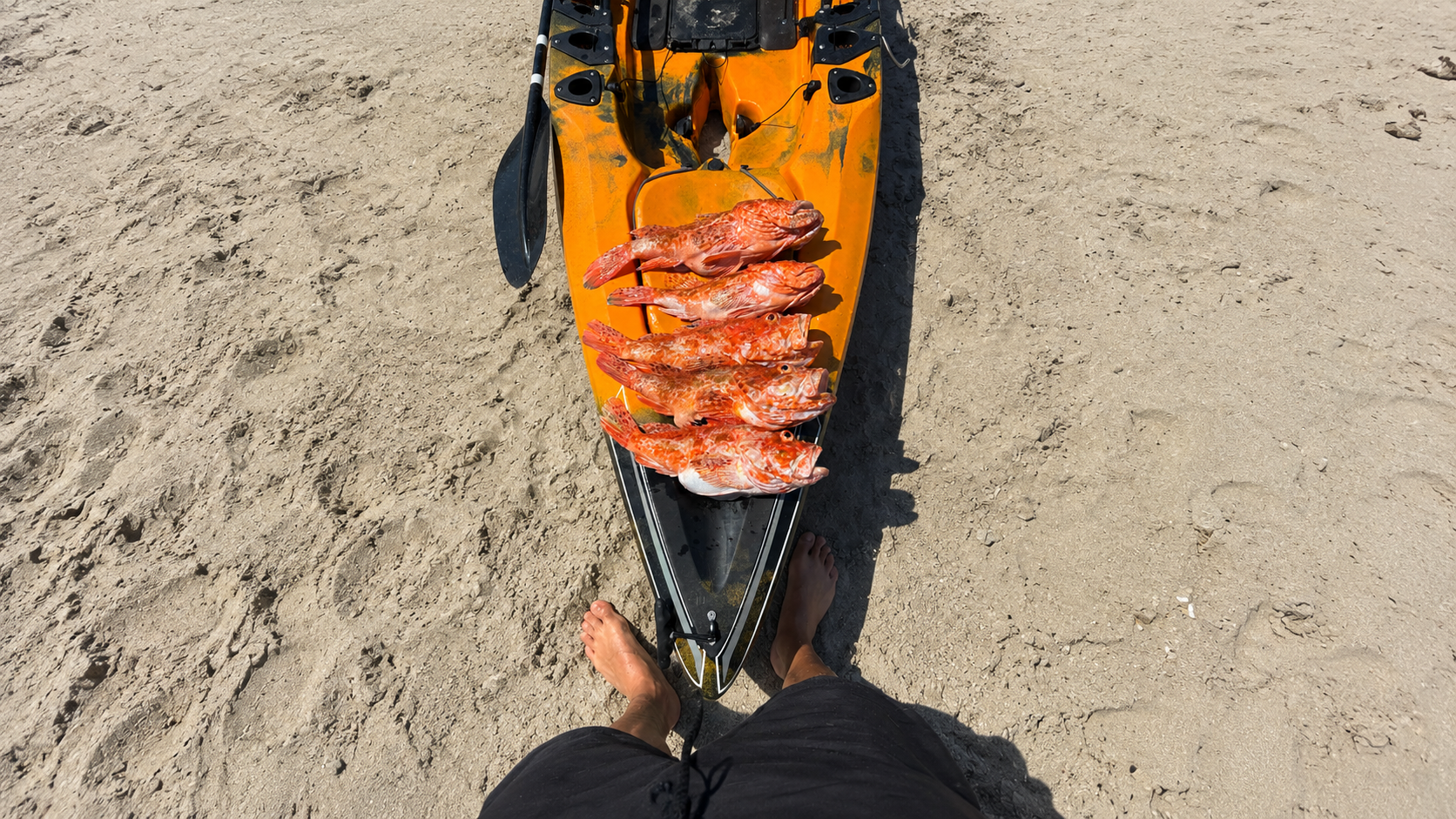
Scorpionfish fishing is not usually a game of chance. Normally, good specimens appear when several factors come together: suitable bottom, depth, available food, little noise and a very natural bait presentation.
The scorpionfish (Scorpaena scrofa) is a bottom fish, heavily tied to rock areas, gravel, crevices and structures where it can camouflage and wait for food. For this reason, when we find an area that produces results, the most important thing is not just making the catch: it's saving exactly where it happened and under what conditions.
That is where CAPTA becomes a key tool for any angler who wants to repeat catches and not rely on memory to protect their most effective spots.
1. It All Starts Before: Finding Horse Mackerel Schools
A good day of scorpionfish fishing often starts by looking for bait.
The horse mackerel is one of those fish that can make a difference. Before going to look for deep bottoms, it is advisable to spend time locating schools of horse mackerel, mackerel or other small fish that can later be used as bait.
For this we can move through areas where there is activity:
- Birds working on the surface.
- Small baitballs on the sonar.
- Intermediate echoes in depth changes.
- Areas with current or activity near points, shoals or drop-offs.
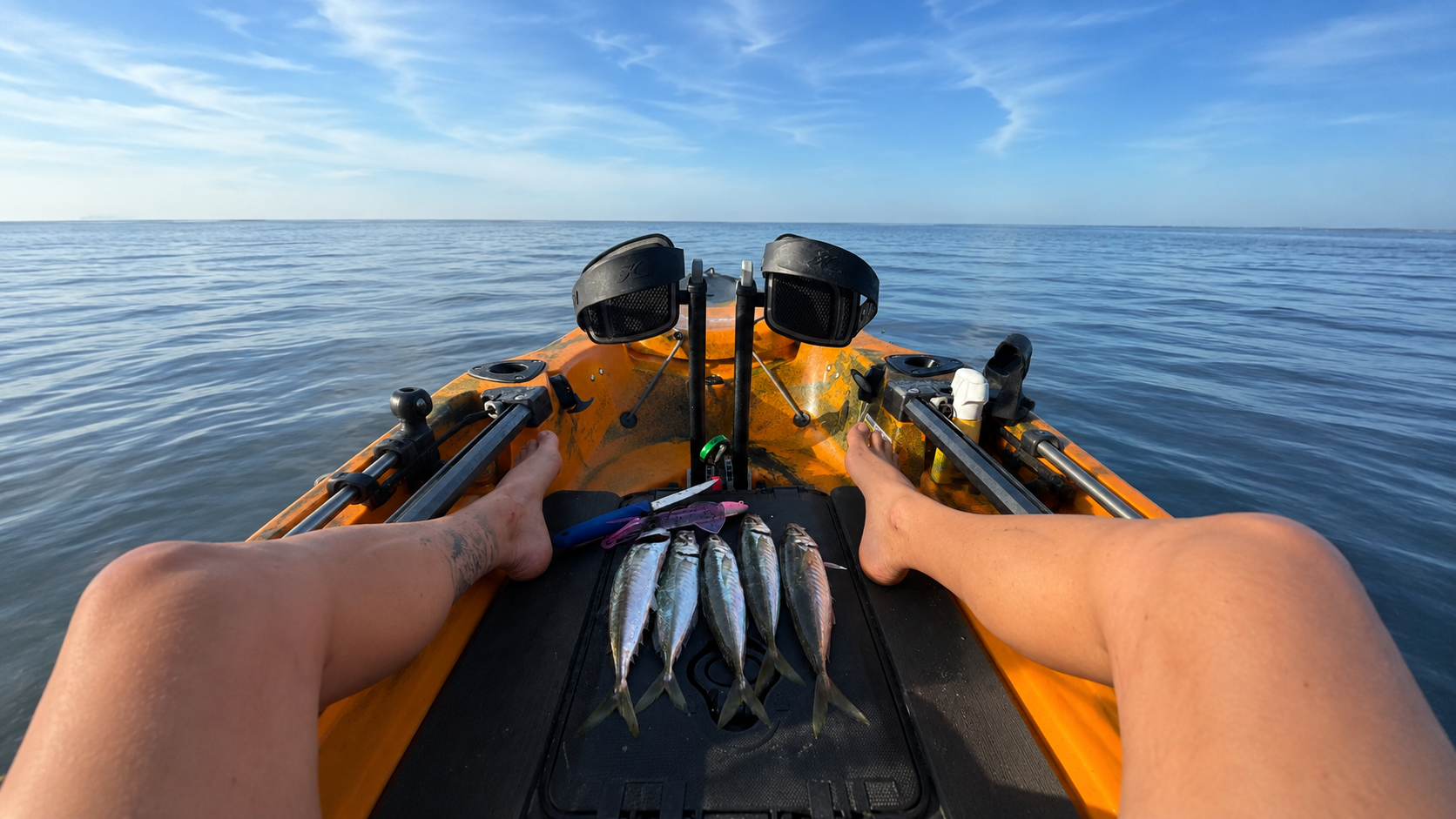
When we find horse mackerel, we are not just getting bait. We are also reading the sea. If there are small fish, there is food. And if there is food, often predators or active bottom fish can appear nearby.
2. Preparing Horse Mackerel Strips for Deep Fishing
Once we have horse mackerel, a very effective technique is to prepare small fillets or strips of meat.
The idea is not to put a huge piece senselessly. For scorpionfish you want a bait that releases a lot of scent, has natural shine, moves with the current, does not completely cover the hook and is well presented near the rock.
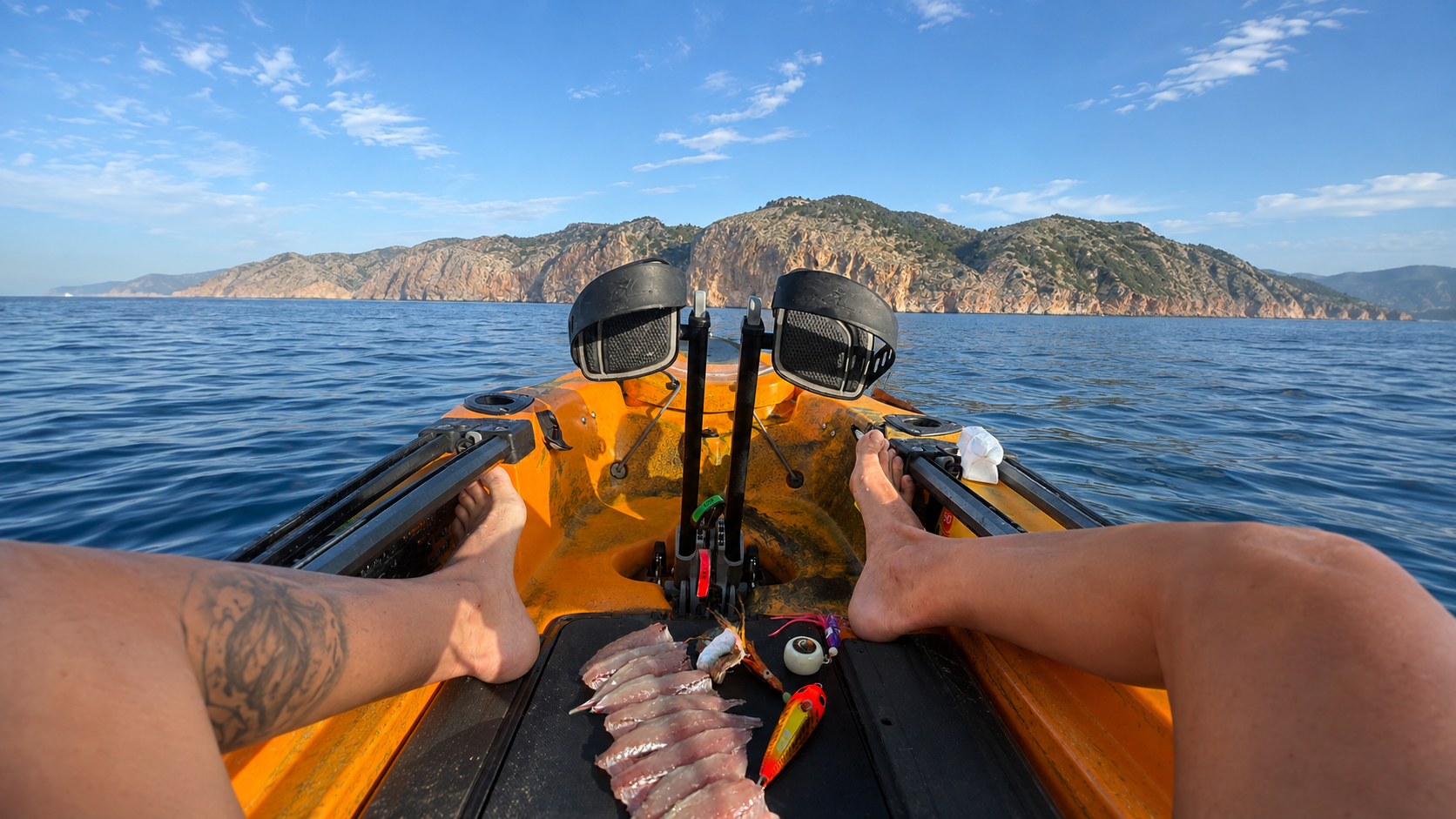
Horse mackerel fillets work very well because they combine scent, texture and resistance. They withstand attacks from small fish better than other soft baits and allow you to set up a fairly natural presentation.
3. Searching for Deep Rock Areas
The scorpionfish is usually very tied to the bottom. For this reason, one of the keys is to look for deep areas with structure and refuge.
Not all rock areas are the same. The best ones usually have loose stones, gravel, small drop-offs, mixed rock and sand areas, or crevices where the fish can hide waiting for prey pushed by the current.
In this type of fishing, a few meters can change everything. You can be fishing on clean sand and not touch anything, and moving slightly over a rock area start getting bites. That is why it is so vital to know how to save GPS coordinates with millimeter precision.
With CAPTA you can quickly mark the waypoint when you find an interesting area, add a note, save a photo and keep the conditions of the moment. Thus, if a rock yields fish, it is not lost in "it was more or less around here".
4. Inchiku Technique for Scorpionfish
The inchiku is a very interesting technique for fishing bottom fish like the scorpionfish, especially when combined with natural bait strips.
The rig allows you to present the lure near the bottom, with movement, shine and vibration. If we also add strips of horse mackerel, squid or other bait, we achieve a lethal presentation.
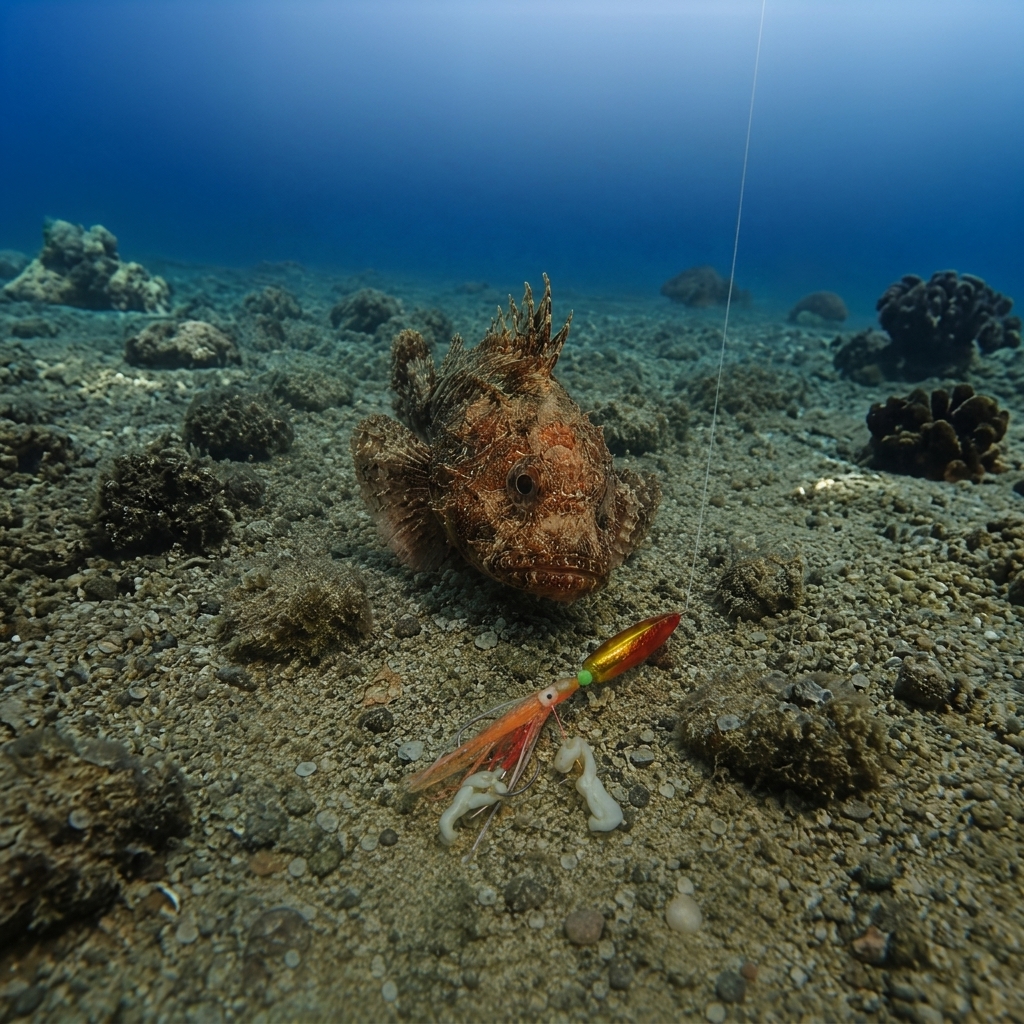
The key is to work the inchiku slowly and in a controlled manner:
- Drop until you touch the bottom.
- Lift gently.
- Maintain constant contact with the structure.
- Avoid overly sudden movements (fast jigging).
- Let the strips work waving with the current.
The scorpionfish does not always pursue over long distances. It often waits, observes and attacks when the bait passes near its hiding place. That is why the precision of the drift and the GPS point is fundamental.
5. Recommended Rods, Reels and Rig
For this fishing it is advisable to use sensitive equipment, but with enough power reserve to work at depth and lift bottom fish.
A logical setup would be a light jigging or inchiku rod, with sensitive action in the tip but good reserve in the butt. Pair it with a reliable reel with progressive drag, thin braided line that cuts the water well, and a resistant fluorocarbon leader (minimum 0.40mm) to withstand rubbing against the rock.
The rod should allow you to feel the bottom and detect small bites. Often the scorpionfish does not strike like a large predator. It can be a dry bite, a strange weight or a simple stop of the lure on the descent.
6. Catching Small Bottom Fish Also Gives Information
Not all bites will be large scorpionfish. Sometimes smaller bottom fish appear. Even if they are not the main target, they can confirm that we are in a lively area. If there are small rock fish and structure, it is possible that at another time or another tide a better specimen will appear.
Here CAPTA becomes useful again. You can save that point as a "promising area", even if the big catch has not yet come out. Add a note like: "Deep rock area. Small bites. Try again with more current". That kind of information is gold when you return weeks later.
7. Saving the Point to Return in a Few Weeks
One of the biggest mistakes in fishing is relying too much on memory. After a day, we all think we remember the exact spot, but over time references, drifts and rocks get mixed up.
With CAPTA you can save the exact GPS point, associate it with the catch photo, detail the approximate depth and keep forever the weather conditions (wind, pressure, tide). Thus, when an area works, it does not remain as "that good rock", but it becomes a real spot, ready to repeat the success.
8. Even if You Use a Plotter, Keep a Secure Backup in CAPTA
Many anglers already use a GPS plotter on their boat. But even so, keeping your points saved also on your phone is very important.
Fishing waypoints should not depend on a single device. A plotter can break down, lose power or not be with you at home when you plan the outing. Besides, you can always learn to export your waypoints from the boat's plotter to your phone quickly.
CAPTA works as a secure and 100% private backup of your fishing points. And if you don't have a cable to connect your equipment, remember that CAPTA includes an OCR function to scan GPS coordinates from a photo in seconds.
9. Repeating Conditions: The Key to Great Catches
A good catch does not just happen by being on a point. The sea conditions also have a radical influence.
For the scorpionfish, the strength of the current, atmospheric pressure, time of day and lunar phase can make the difference. The value of CAPTA is not just in saving cold coordinates, it is in helping you remember the full context.
It is not just about returning to the exact same place. It is about returning to the same rock when the sea looks like the day it worked.
10. CAPTA as a Fishing Spots Diary
CAPTA is designed for anglers who want to protect their points and return to them with military precision. Over time, each waypoint becomes a small knowledge card. It is not just a point on the map, it is a protected and local fishing memory, far from commercial cloud databases. And that is what differentiates an angler who improvises from one who builds patterns and understands predators.
11. Download CAPTA and Protect Your Scorpionfish Areas
Good scorpionfish and deep rock points do not appear every day. If an isolated gravel area has yielded fish for you, keep it in a safe place where no community app can expose it to other users.
Download CAPTA for free on iOS and Android. Keep the accuracy of your inchiku fishing, document your catches offline and ensure that that rock you worked so hard on today remains your secret next month.
Frequently Asked Questions (FAQ)
At what depth is scorpionfish usually caught with inchiku?
The scorpionfish is a typically benthic species that is comfortably found between 20 and 150 meters deep, always tied to the rock. In sport fishing with inchiku or light jigs, the best results are usually obtained by exploring small drop-offs, sharp falls and mixed gravel bottoms between 30 and 60 meters. Using CAPTA to record the exact depth at which you got bites on a single day will help you deduce the sinking pattern of the species on that specific day.
Why is it better to use fresh horse mackerel fillets instead of commercial baits?
Fresh horse mackerel or mackerel secrete natural oils and blood that act as a powerful olfactory attractant in deep areas where light does not reach. Unlike frozen commercial baits, a well-cut fresh horse mackerel fillet withstands the tension of going down to 40 meters better and resists the first "timid" attacks of small fish, ensuring that when the scorpionfish decides to attack, the hook remains attractively baited.
How can I know if I am passing the lure over the correct rock?
To ensure that your bait passes through the structure, you need to combine reading your sonar with good waypoint and drift management. The wind and current will displace your boat, so you must position the boat upcurrent of the rock. Having the exact coordinate of the rocky head saved in your CAPTA application, you can visually calculate your drift to ensure that the inchiku descends vertically right when you pass over the "hotspot".